
Reproducible research depends on reproducible materials. If one lot of a peptide is 99% pure and the next is 94% with a different impurity profile, results can shift for reasons that have nothing to do with the experiment. Batch consistency is how a laboratory protects itself from that hidden variable.
Why Lots Differ
Synthetic peptides are usually made by solid-phase peptide synthesis (SPPS). Every coupling step can leave small amounts of related impurities (D'Hondt et al., 2014):
- Deletion sequences: a residue failed to couple.
- Insertion sequences: a residue coupled twice.
- Truncations: synthesis stopped early.
- Incomplete deprotection: protecting groups left on side chains.
- Racemization: an amino acid changed from the L- to the D-form.
- Oxidation and deamidation: for example at methionine or asparagine.
Purification, lyophilization and counter-ion content (such as residual TFA or acetate) also vary from run to run. Two lots can both pass a purity specification and still differ in what makes up the remaining percentage.
What to Compare Between Lots
| Attribute | Method | What to look for |
|---|---|---|
| Identity | Mass spectrometry (LC-MS) | Observed mass matches the expected molecular weight |
| Purity | Reversed-phase HPLC | Main-peak % within a stated specification |
| Impurity profile | HPLC chromatogram | No new or growing impurity peaks |
| Net peptide content | Amino acid analysis or nitrogen content | Similar active content per vial |
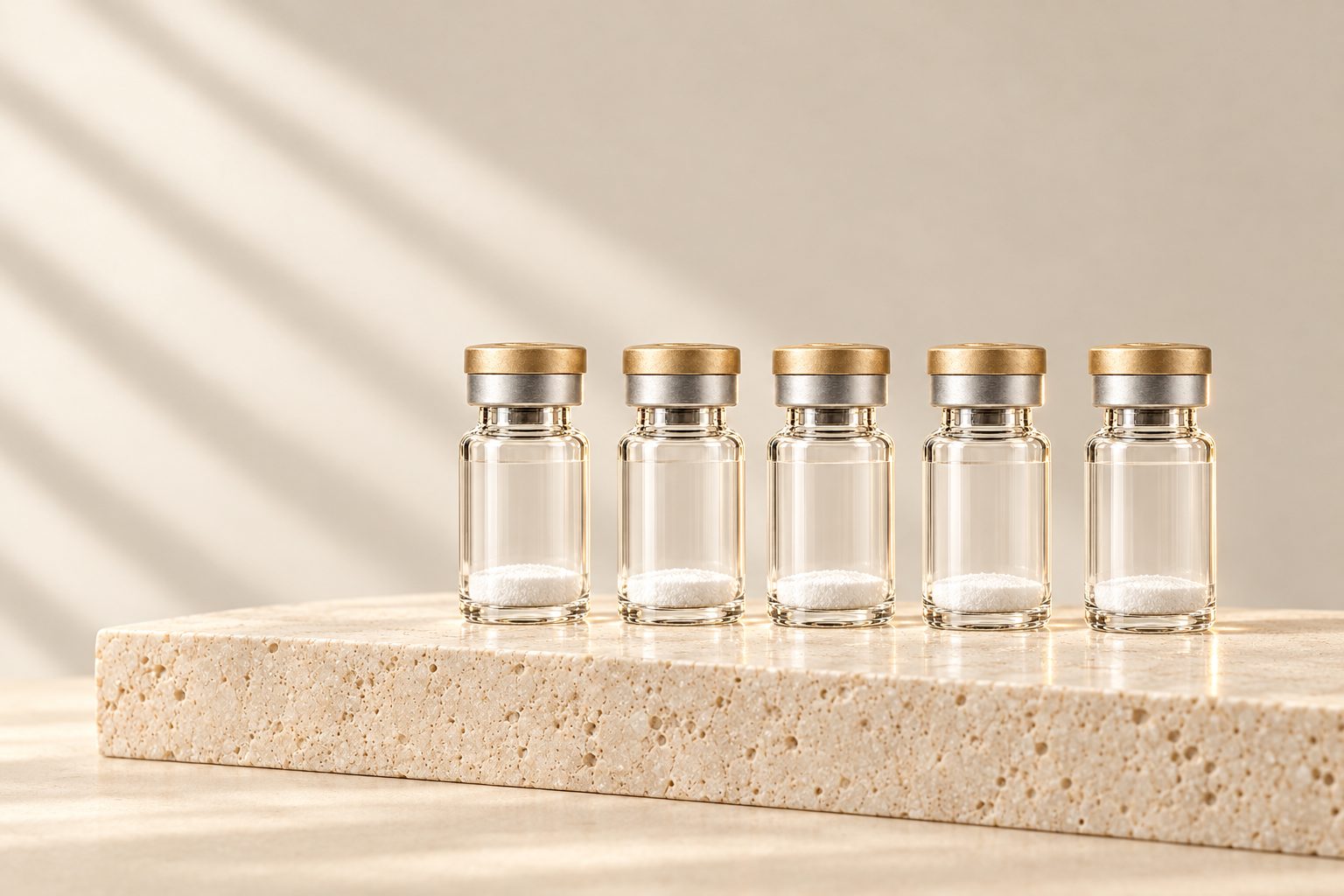
| Appearance | Visual | Consistent lyophilized cake or powder |
| Fill amount | Gravimetric or assay | Matches the labeled amount |
See How to Read a Peptide COA for how each section of a certificate maps to these checks.
Building a Lot-Tracking Habit
- Record the lot number of every vial used. Tie it to the experiment in your lab notebook or LIMS.
- Keep the COA for every lot. Do not rely on a generic "typical" COA.
- Compare chromatograms, not just percentages. A new peak matters even if the total purity is the same.
- Bridge lots in sensitive assays. When switching lots mid-study, run a small side-by-side comparison first.
- Store retained samples correctly. See Peptide Storage and Stability.
The Documentation Template tool gives a ready-made structure for these records, and Building a Documentation-First Research Peptide Program explains how to fit it into lab SOPs.
Serial-Level Traceability
Lot numbers tell you which batch a vial came from. Serial numbers go one step further and identify the individual vial. At Ageless Peptides, every vial carries its own serial number, linked to its lot. Scanning the code on the label and entering the serial number opens the COA for that lot, tested by Vanguard Laboratory (Olympia, WA), an ISO/IEC 17025:2017-accredited lab. This makes it simple to confirm that the vial on your bench matches the certificate in your file, whether it is Ipamorelin 5mg, TB-500 5mg or any other item in the catalog.
Related Reading
- GMP vs Research Grade Peptides: What's the Difference?
- Third-Party Testing: Industry Standards and Best Practices
- Peptide Stability Testing Protocol
References
- D'Hondt M, et al. Related impurities in peptide medicines. J Pharm Biomed Anal. 2014;101:2–30.
- ICH. Q7 Good Manufacturing Practice Guide for Active Pharmaceutical Ingredients. 2000.
All products sold by Ageless Peptides are for Research Use Only. Not for human or animal consumption.