

"Peptide bioregulators" is a term from a long research program, mostly in Russia, on very short peptides (two to four amino acids) and tissue-derived peptide preparations. Epitalon and Thymalin are the best known. This overview explains what they are, what the published research actually shows, and how to read that research carefully.
What Are Peptide Bioregulators?
The concept, developed largely by V. Kh. Khavinson and colleagues, proposes that some short peptides can enter cells and influence gene expression, possibly by interacting with DNA or chromatin (Khavinson et al., 2016). Two kinds of material are studied:
| Type | Example | What it is |
|---|---|---|
| Synthetic short peptide | Epitalon (Ala-Glu-Asp-Gly) | A defined tetrapeptide made by chemical synthesis |
| Tissue-derived preparation | Thymalin | A mixture of polypeptides extracted from calf thymus |
The difference matters. A synthetic tetrapeptide has one defined structure that a COA can confirm. A tissue extract is a mixture, so batch-to-batch comparison is much harder.
Epitalon Research
Epitalon was designed as a synthetic counterpart of epithalamin, a pineal gland extract. Published work includes:
- Animal studies. A 2003 study in female SHR mice reported effects on several biomarkers of aging, life span and spontaneous tumor incidence (Anisimov et al., 2003).
- Cell studies. Work in cell cultures has examined telomerase activity and telomere length.
- Gene-expression studies within the bioregulator framework described above.
A recent narrative review stresses that these findings remain cellular and mechanistic, and should not be read as evidence of clinical outcomes or extended human life span (Int J Mol Sci review, 2026). Much of the literature comes from one research group, and independent replication is limited.
Thymalin Research
Thymalin has been studied mainly in Russian-language literature as an immunomodulatory preparation. Because it is a tissue-derived mixture rather than a single compound, its composition is harder to define and confirm analytically. Ageless Peptides does not sell Thymalin.
Reading This Literature Critically
- Check the model. Cell, animal and human studies answer very different questions.
- Look for independent replication. Results from a single group need confirmation.
- Confirm the material. Studies of tissue extracts do not automatically apply to synthetic peptides, and the reverse is also true.
- Separate mechanism from outcome. A change in a biomarker is not a proven effect on health.
For a broader view of this field, see Longevity & Cellular Aging Research with Peptides.
Sourcing Checklist for Short Peptides
- Identity by mass spectrometry. A tetrapeptide has a small, exact mass; the COA should match it.
- Purity by HPLC. Short peptides can co-elute with similar impurities; ask for the chromatogram.
- Counter-ion and net peptide content. These make up a larger share of the mass in very short peptides.
See How to Read a Peptide COA and GMP vs Research Grade Peptides.
Research Compounds in This Area
Each lot is tested by Vanguard Laboratory (Olympia, WA), an ISO/IEC 17025:2017-accredited lab, and every vial carries a QR code and unique serial number linked to that lot's COA:
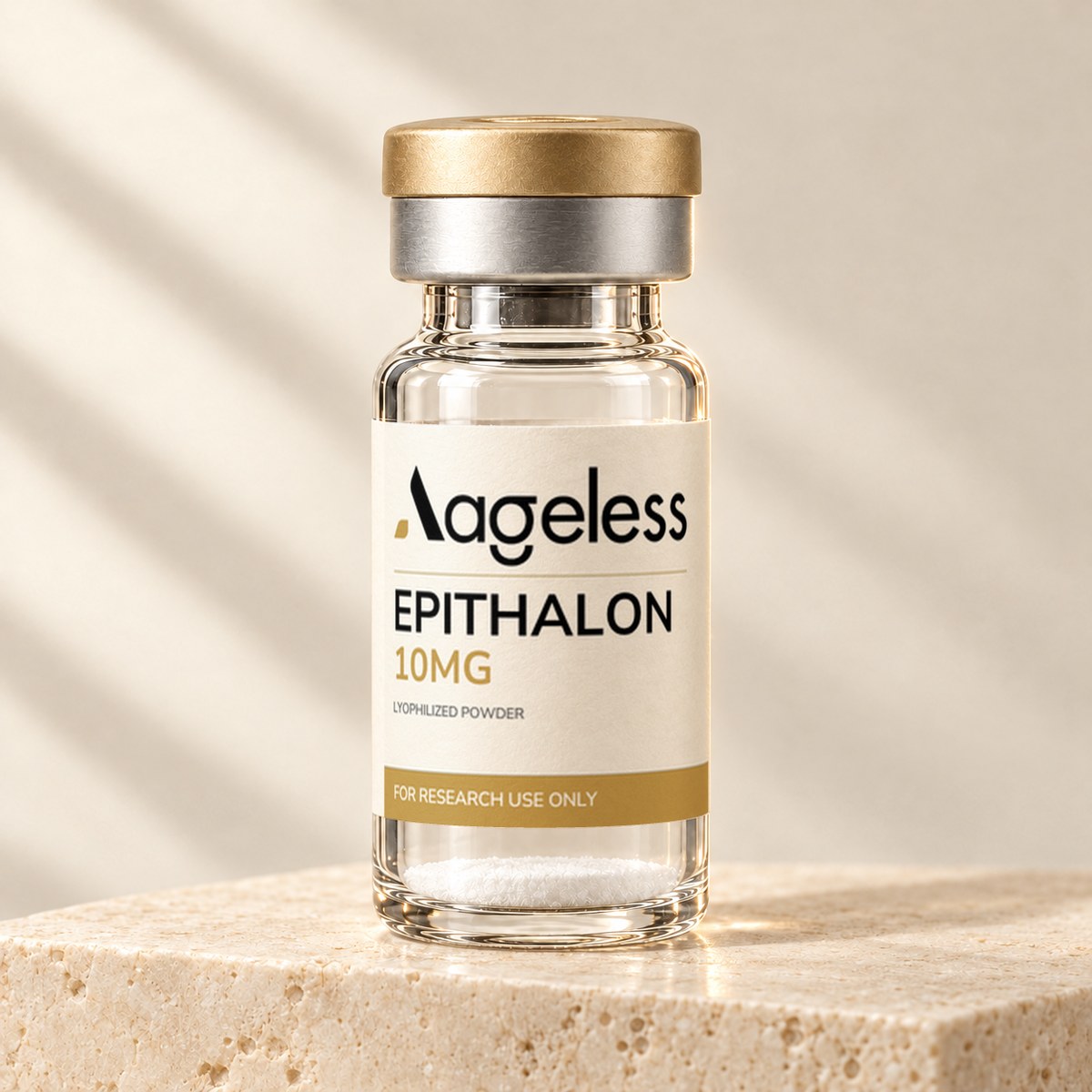
- Epithalon 10mg
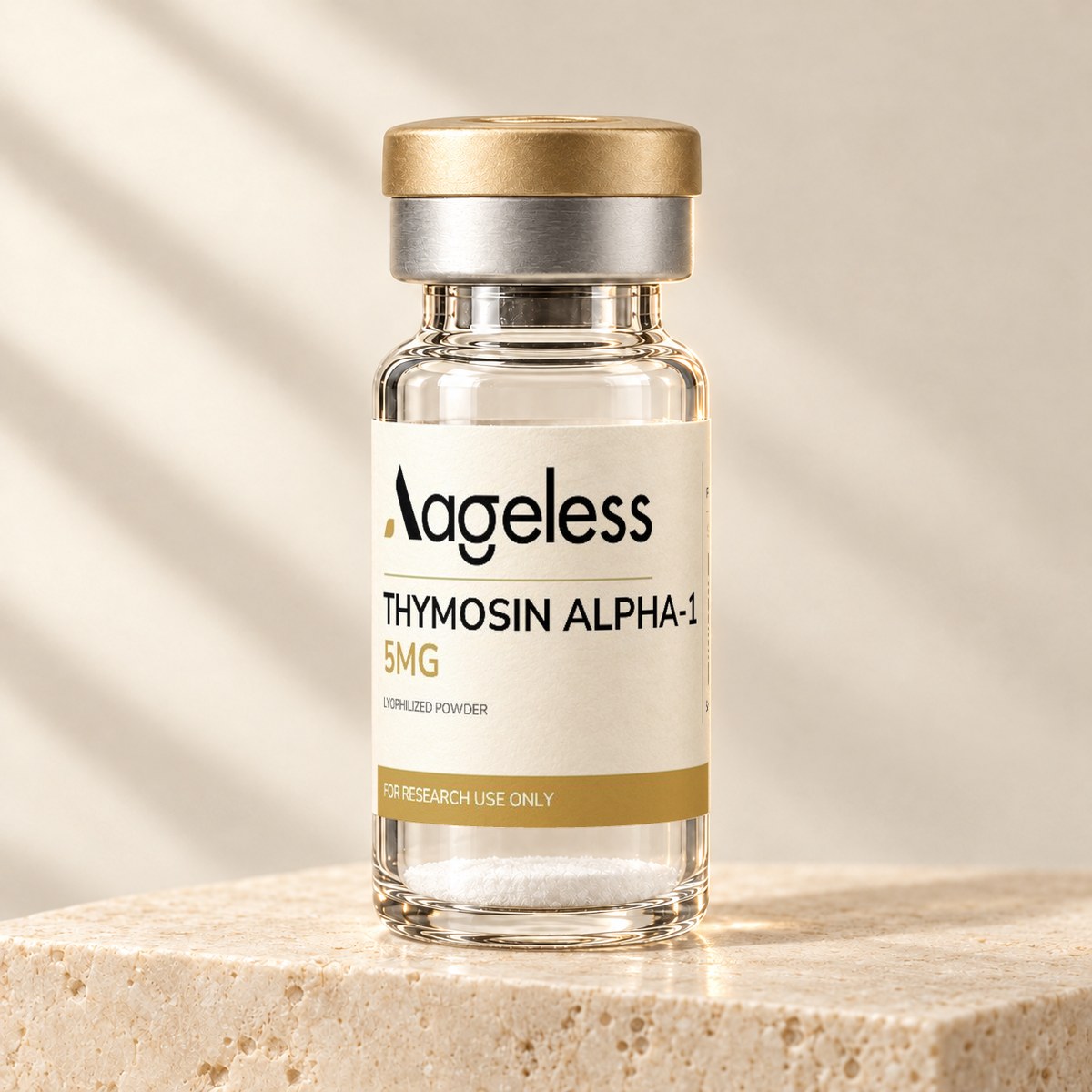
- Thymosin Alpha-1 5mg, a defined synthetic peptide often studied alongside thymus research
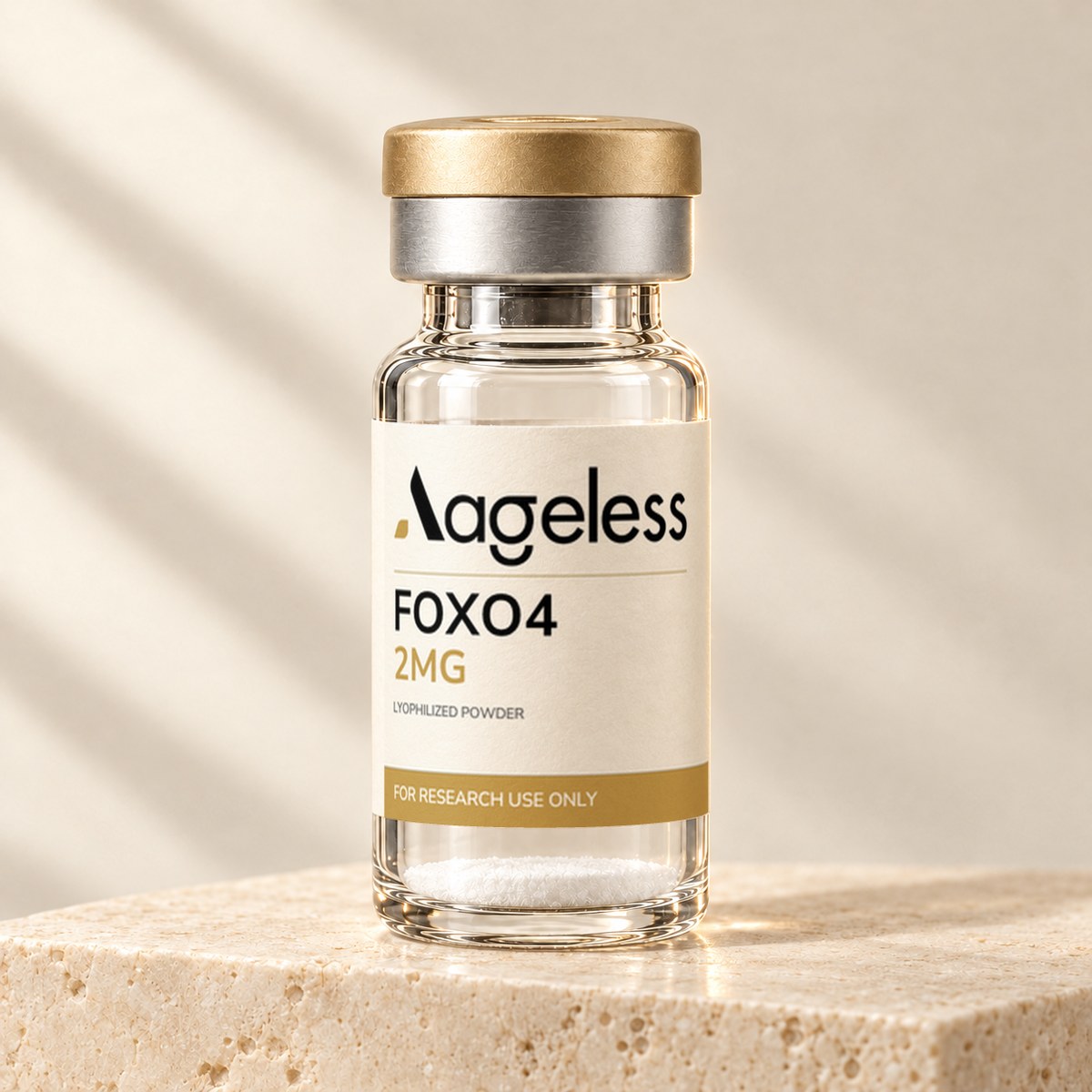
- FOXO4-DRI 2mg, studied in cellular senescence research
Related Reading
- Understanding Research-Use-Only (RUO) Peptides in 2026
- Copper Peptides: GHK-Cu Research Applications
- Peptide Stability Testing Protocol
References
- Khavinson VKh, Lin'kova NS, Tarnovskaya SI. Short Peptides Regulate Gene Expression. Bull Exp Biol Med. 2016;162(2):288–292.
- Anisimov VN, et al. Effect of Epitalon on biomarkers of aging, life span and spontaneous tumor incidence in female Swiss-derived SHR mice. Biogerontology. 2003;4(4):193–202.
- Epitalon and Epithalamin: A Narrative Review of Mechanistic, Preclinical, and Clinical Evidence. Int J Mol Sci. 2026.
All products sold by Ageless Peptides are for Research Use Only. Not for human or animal consumption. Nothing here describes use in people or animals.