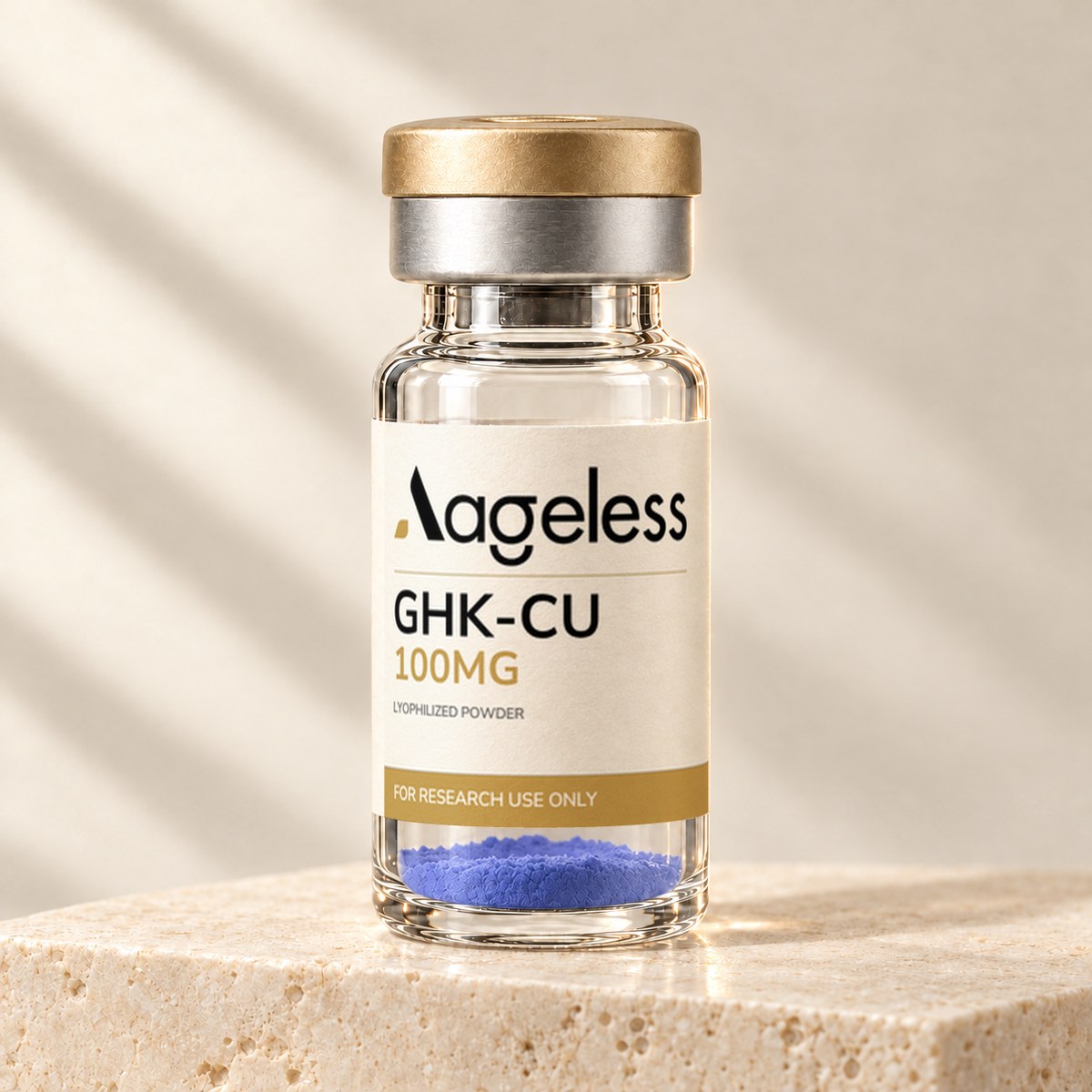

GHK (glycyl-L-histidyl-L-lysine) is a naturally occurring tripeptide first isolated from human plasma. It binds copper(II) with high affinity, forming the complex GHK-Cu. Over four decades it has become one of the most studied small peptides in cell and tissue biology, especially in work on the extracellular matrix and gene expression.
Structure and Copper Binding
GHK is only three amino acids long. Its copper affinity is similar to the copper transport site on albumin, which is why it is studied as a copper carrier (Pickart, 2008). Researchers work with two forms:
| Form | Description | Common research use |
|---|---|---|
| GHK (free tripeptide) | Peptide without bound copper | Binding studies, control arm |
| GHK-Cu | Copper(II) complex | Cell culture, matrix and gene-expression studies |
The ratio of copper to peptide affects results, so the form and copper content on the COA matter.
Main Research Themes
- Extracellular matrix. In cell and animal models, GHK-Cu has been studied for effects on collagen, elastin and glycosaminoglycan synthesis and on the enzymes that remodel the matrix (Pickart et al., 2015).
- Gene expression. Connectivity Map analyses suggested GHK is associated with changes in the expression of a large number of human genes in cell-line data, which has made it a tool for studying gene-network regulation (Pickart et al., 2015).
- Oxidative stress and inflammation. Preclinical work has examined antioxidant and anti-inflammatory signaling; one mouse study identified peroxiredoxin 6 as a binding target (Redox Biology, 2024).
- Delivery chemistry. Newer work explores GHK-Cu as cargo in delivery systems and as a modified (for example biotinylated) complex.
These findings come from cell culture and animal models. They do not establish any use in people.
Handling Considerations in the Lab
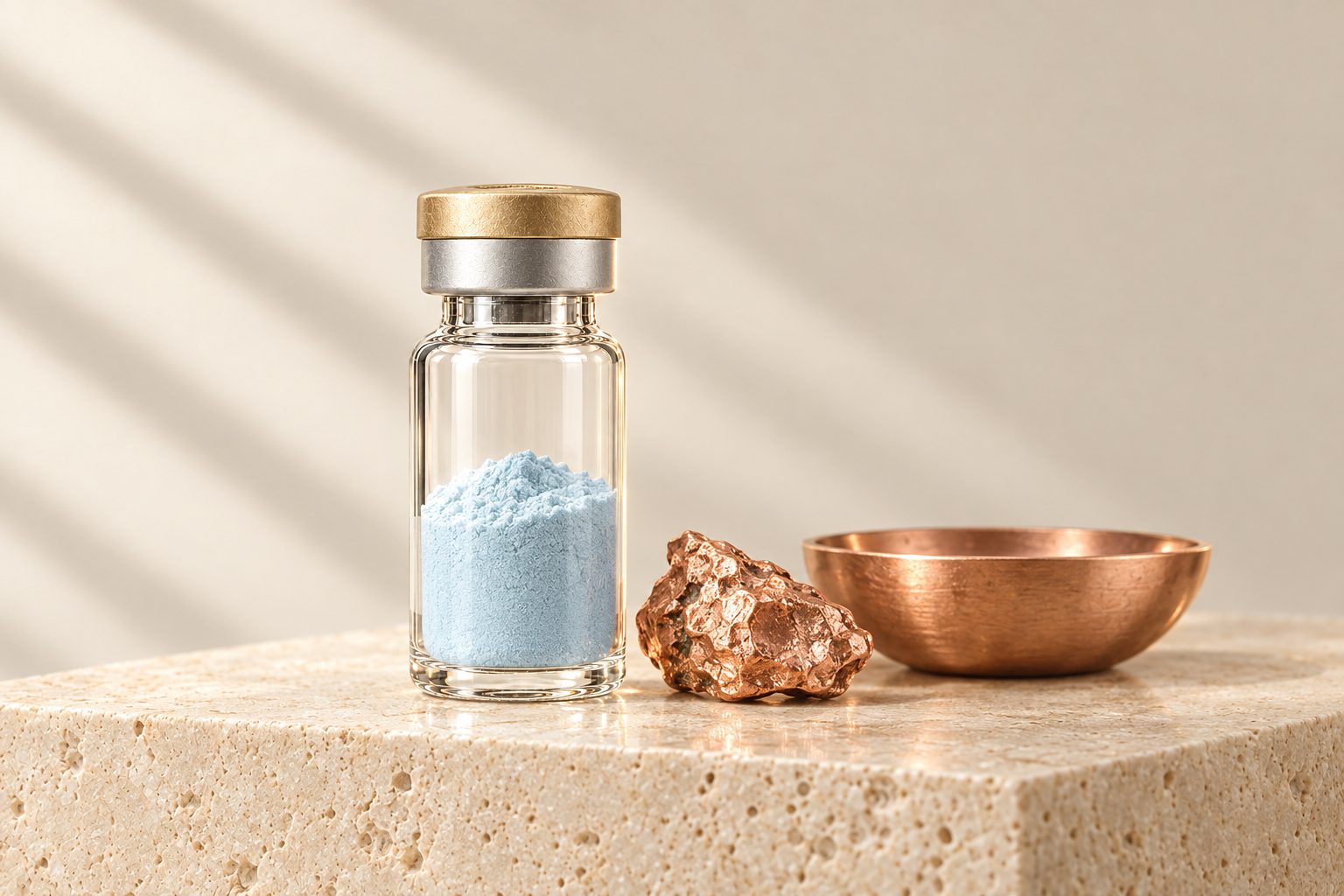
- Color is expected. GHK-Cu is blue to violet because of the copper complex; a colorless product suggests free GHK, not the complex.
- Watch pH and chelators. Buffers containing EDTA or other chelators can strip copper from the complex.
- Confirm copper content. Ask whether the COA reports identity of the complex or the free peptide.
- Store as directed. Follow the storage details on the product page; see Peptide Storage and Stability.
Combination Research Formats
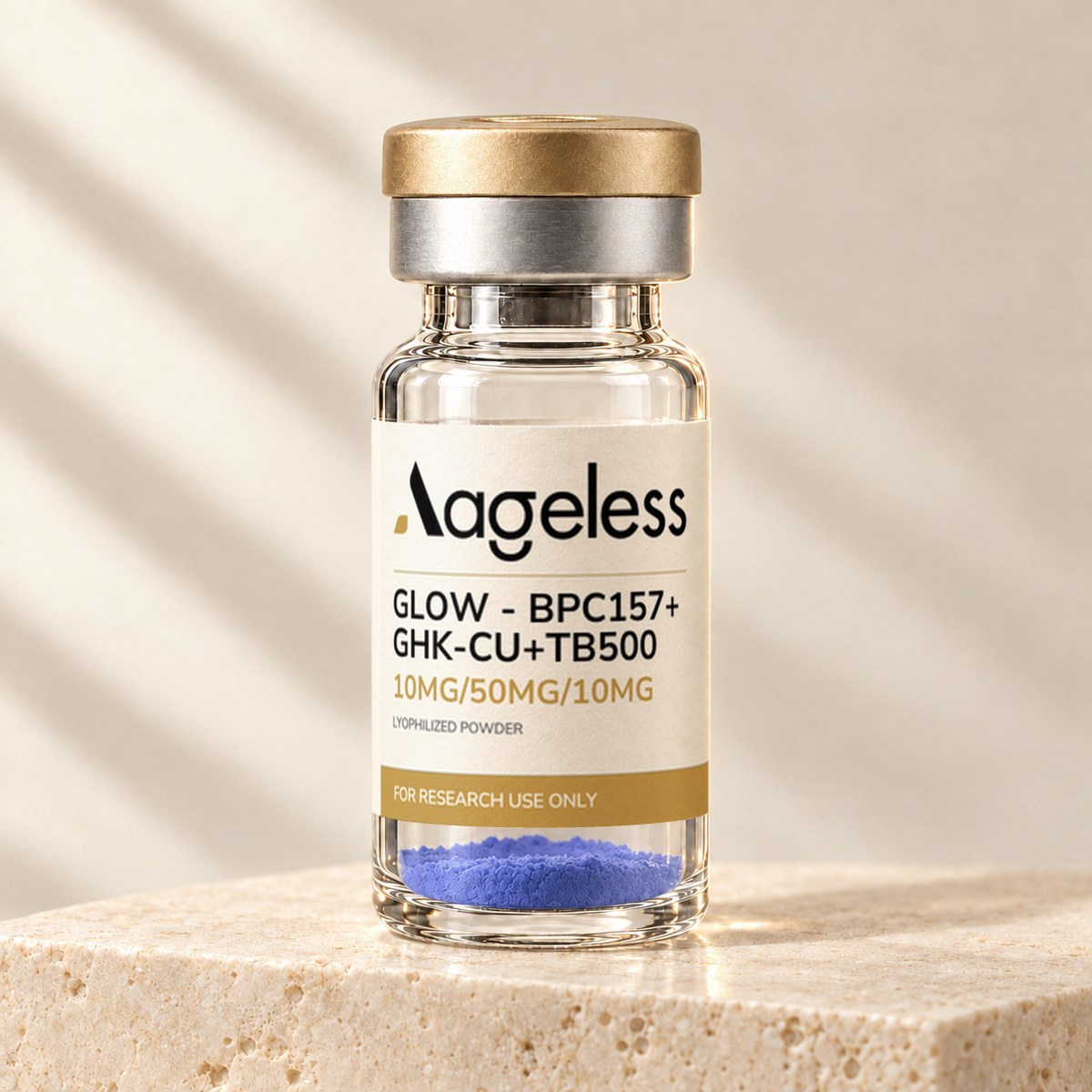
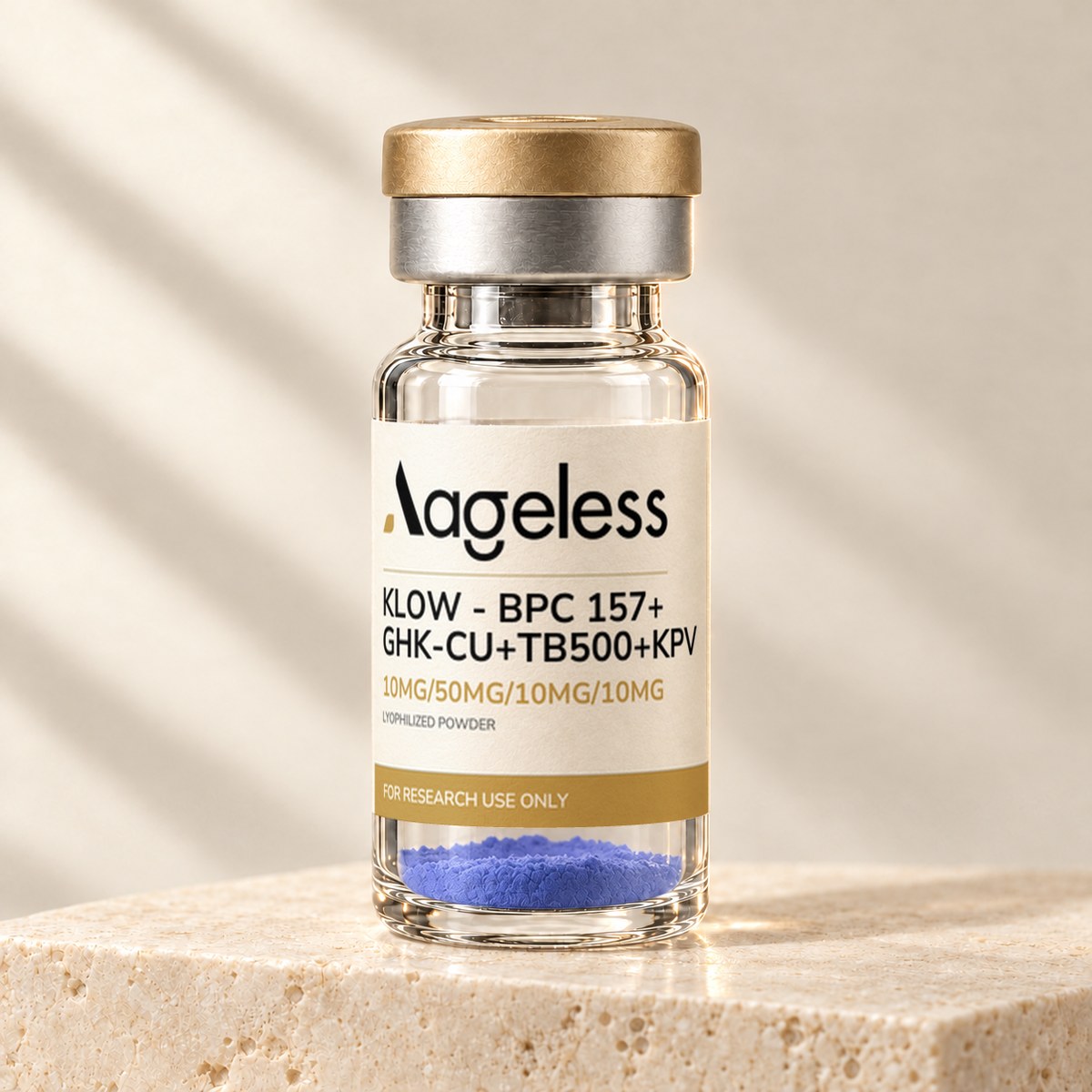
GHK-Cu also appears in multi-peptide research blends with tissue-repair peptides such as BPC-157 and TB-500. For background on those compounds, see Tissue-Repair Peptide Platforms: BPC & TB-500 Research Guide.
Research Compounds in This Area
Each lot is tested by Vanguard Laboratory (Olympia, WA), an ISO/IEC 17025:2017-accredited lab, and every vial carries a QR code and unique serial number linked to that lot's COA:
Related Reading
- Longevity & Cellular Aging Research with Peptides
- How to Read a Peptide Certificate of Analysis (COA)
- Batch Consistency in Peptide Quality
References
- Pickart L. The human tri-peptide GHK and tissue remodeling. J Biomater Sci Polym Ed. 2008.
- Pickart L, Vasquez-Soltero JM, Margolina A. GHK Peptide as a Natural Modulator of Multiple Cellular Pathways in Skin Regeneration. Biomed Res Int. 2015.
- The glycyl-L-histidyl-L-lysine-Cu2+ tripeptide complex attenuates lung inflammation and fibrosis in silicosis by targeting peroxiredoxin 6. Redox Biol. 2024.
All products sold by Ageless Peptides are for Research Use Only. Not for human or animal consumption. Nothing here describes use in people or animals.