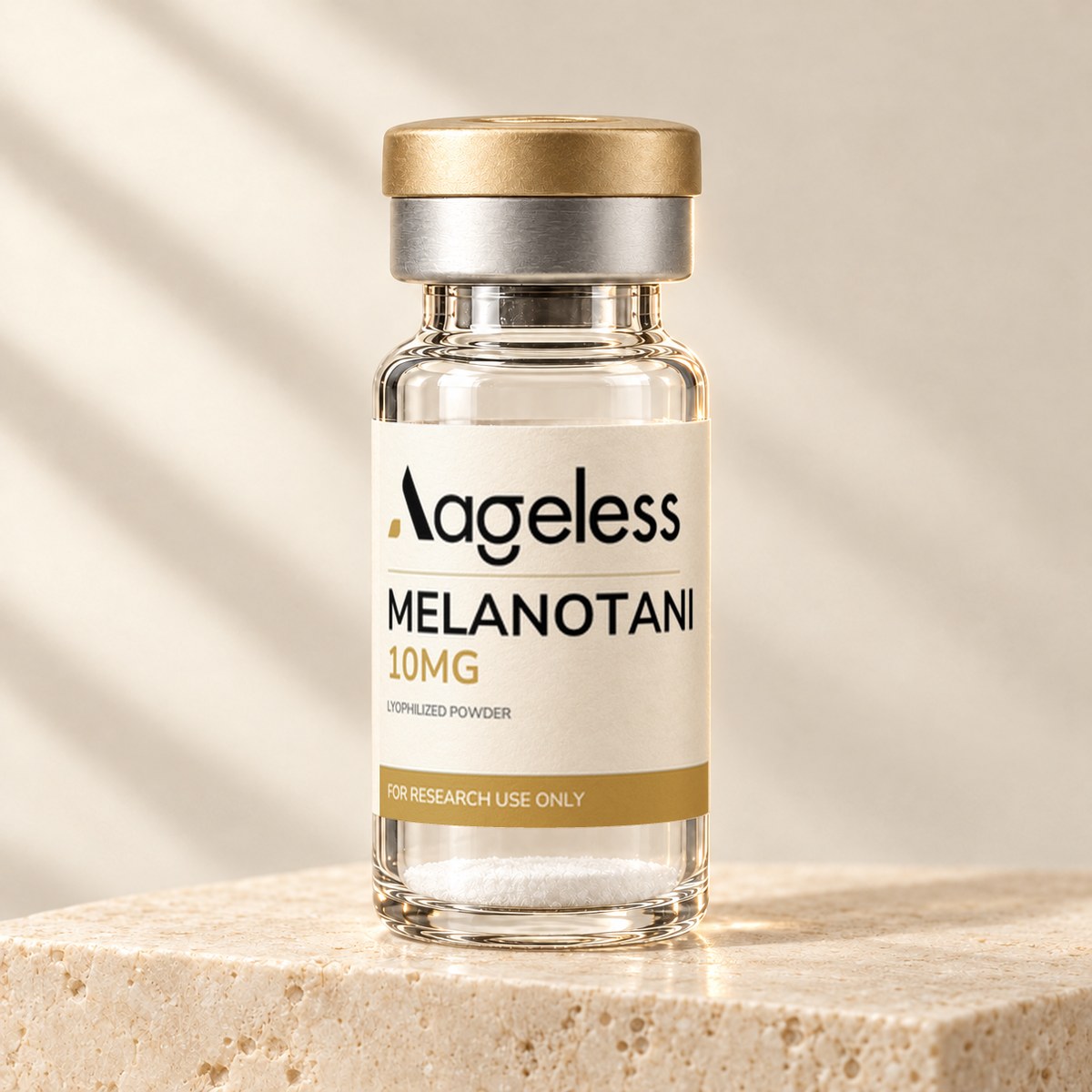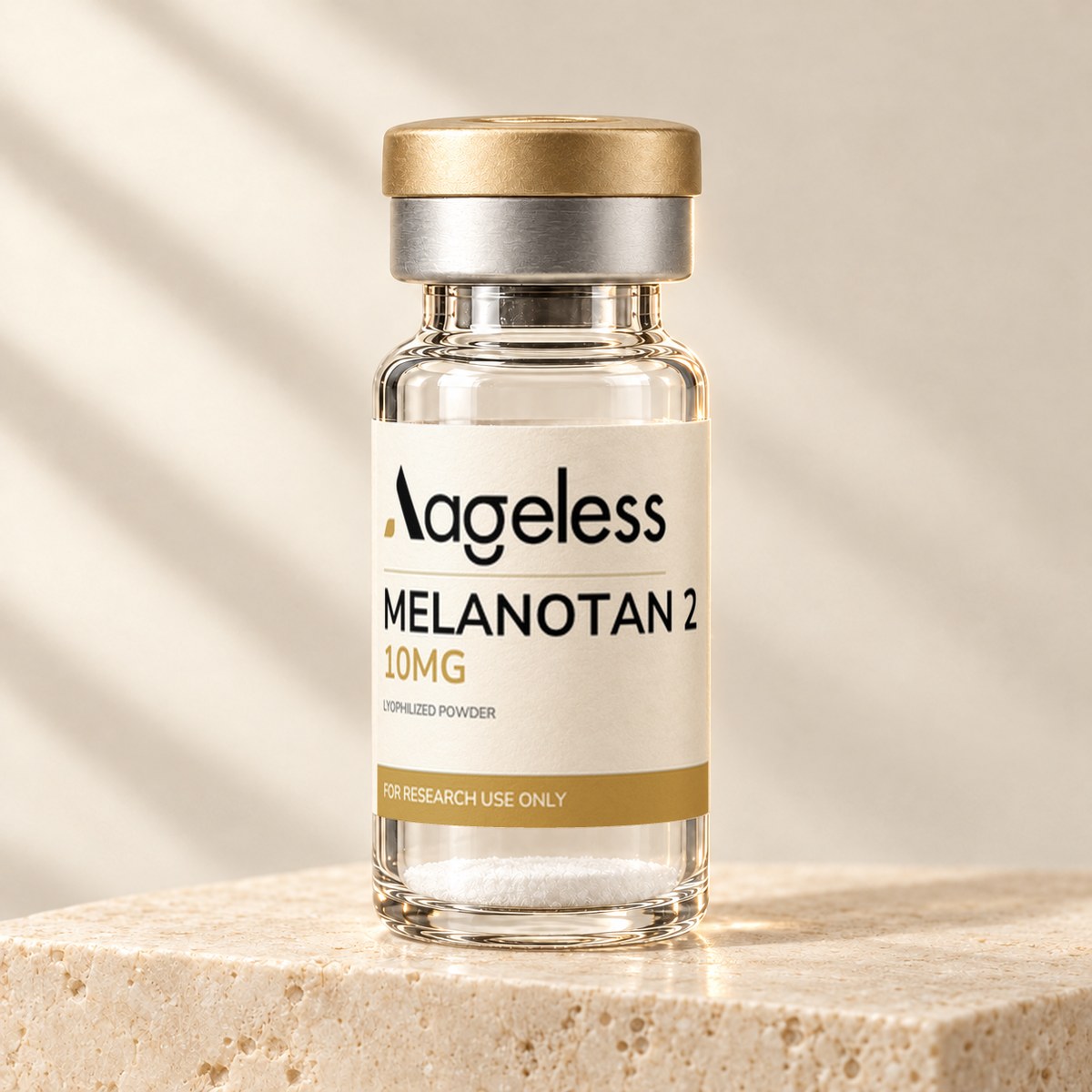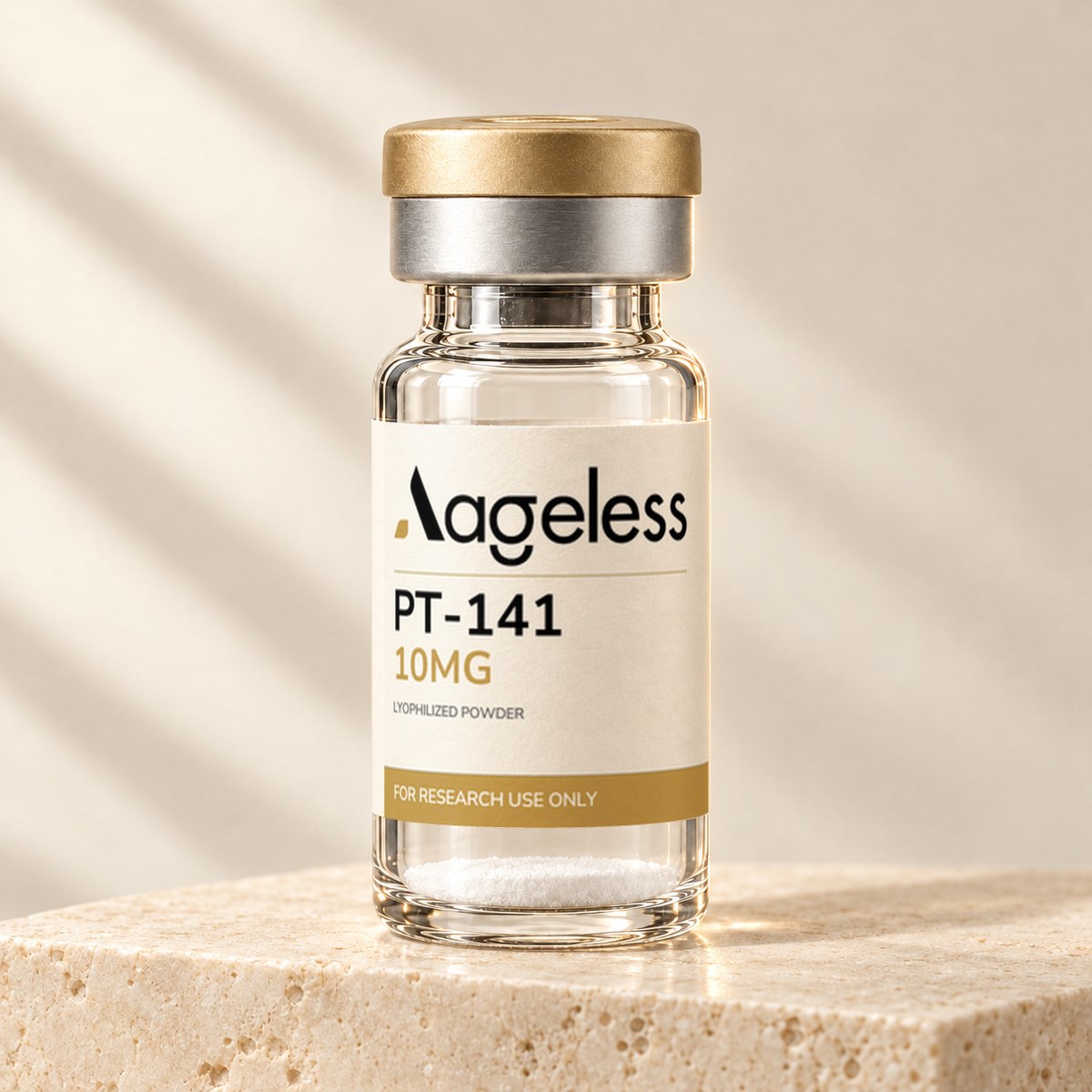


The melanocortin system is a family of hormonal and neuropeptide signals built around five G protein–coupled receptors, MC1R through MC5R, and the peptides that bind them (Cone, 2006). Synthetic melanocortin analogs are standard tools for mapping which receptor drives which signal. This overview covers the receptors, the main research analogs and what to check when sourcing them.
The Five Melanocortin Receptors
| Receptor | Main tissue expression | Physiology studied |
|---|---|---|
| MC1R | Skin melanocytes, immune cells | Pigmentation, inflammation signaling |
| MC2R | Adrenal cortex | ACTH-driven steroidogenesis |
| MC3R | Brain, peripheral tissues | Energy balance, inflammation |
| MC4R | Brain (hypothalamus) | Energy homeostasis, central signaling |
| MC5R | Exocrine glands | Gland secretion |
The natural ligands are cleaved from pro-opiomelanocortin (POMC): α-, β- and γ-MSH and ACTH. Full-length α-MSH binds MC1R, MC3R, MC4R and MC5R with little selectivity (melanocortin ligand review, 2017), which is why more selective synthetic analogs were developed. The central circuits are reviewed in Cone, 2005.
Synthetic Analogs Used in Research
- Melanotan I ([Nle4, D-Phe7]-α-MSH) is a linear 13-residue analog. Two substitutions make it far more resistant to enzymatic breakdown than α-MSH.
- Melanotan II is a cyclic lactam analog of the core α-MSH sequence. Cyclization makes it smaller and more stable, and it binds several melanocortin receptors.
- PT-141 is closely related to Melanotan II. It differs at the C-terminus (a free acid instead of an amide), which changes its receptor profile and pharmacology.
Because these analogs act on more than one receptor, studies often use them together with selective antagonists or receptor-knockout models to separate the effects of each receptor.
Common Research Designs
- Receptor binding and cAMP signaling assays in cells expressing a single MC receptor.
- Selectivity panels comparing activity across MC1R, MC3R, MC4R and MC5R.
- Melanocyte cell models for MC1R signaling.
- Animal models of central melanocortin signaling.
- Analytical work on stability of cyclic versus linear analogs.
Sourcing Checklist
- Confirm the exact molecule. Melanotan II and PT-141 differ by one terminal group, about 1 Da in mass. The COA's mass spectrometry result should match the stated compound.
- Check purity and impurities. Cyclic peptides can carry uncyclized or dimer impurities; ask for the chromatogram.
- Mind light and moisture. Follow the storage details on the product page; see Peptide Storage and Stability.
How to Read a Peptide COA explains each of these checks.
A Note on Compliance
Melanocortin analogs are often marketed with claims about appearance or human use. Those claims turn a research product into an unapproved drug in the eyes of regulators. See FDA Expectations for RUO Peptide Vendors and Understanding RUO Peptides in 2026.
Research Compounds in This Area
Each lot is tested by Vanguard Laboratory (Olympia, WA), an ISO/IEC 17025:2017-accredited lab, and every vial carries a QR code and unique serial number linked to that lot's COA:
Related Reading
- Recent Advances in Peptide Research Technology
- Batch Consistency in Peptide Quality
- Third-Party Testing: Industry Standards and Best Practices
References
- Cone RD. Studies on the physiological functions of the melanocortin system. Endocr Rev. 2006.
- Cone RD. Anatomy and regulation of the central melanocortin system. Nat Neurosci. 2005.
- Bench-Top to Clinical Therapies: A Review of Melanocortin Ligands from 1954 to 2016. Biochim Biophys Acta. 2017.
All products sold by Ageless Peptides are for Research Use Only. Not for human or animal consumption. Nothing here describes use in people or animals.