
A peptide that was 99% pure on the day it was tested is not guaranteed to be 99% pure months later. Stability testing tells a laboratory how fast a material changes under its real storage and handling conditions, so results are not skewed by degraded material.
How Peptides Degrade
Peptides degrade through chemical and physical pathways (Manning et al., 2024):
- Hydrolysis: cleavage of peptide bonds, faster at extreme pH and with moisture.
- Deamidation: asparagine and glutamine convert to acidic residues.
- Oxidation: methionine, cysteine, tryptophan and histidine are most sensitive.
- Disulfide scrambling: for cysteine-containing sequences.
- Aggregation and adsorption: peptides stick to each other or to container surfaces.
Moisture, temperature, light, oxygen and pH all speed these up. Dry, lyophilized material is far more stable than material in solution.
Designing a Stability Study
The ICH Q1A(R2) guideline sets the framework used for regulated drug substances (ICH Q1A(R2)). Research labs can borrow its structure at a smaller scale:
- Define the material and container. Same lot, same vial type, same closure.
- Choose storage conditions. Match how you actually store the material, plus one stress condition.
- Set time points. For example 0, 1, 3, 6 and 12 months.
- Pick stability-indicating methods. Methods that can separate the intact peptide from its degradants.
- Set acceptance criteria up front. For example, main-peak purity stays within a defined range and no new impurity rises above a set level.
- Record everything. Lot number, condition, date pulled, analyst and raw data.
Typical Study Conditions
| Condition | Purpose |
|---|---|
| −20 °C, dry, dark | Long-term storage of lyophilized material |
| 2–8 °C | Short-term storage condition |
| 25 °C / 60% relative humidity | Room-temperature excursion |
| 40 °C / 75% relative humidity | Accelerated (stress) condition |
| Light exposure | Photostability screen |
Accelerated conditions do not predict shelf life on their own. They show which degradation pathways matter, so long-term data can be read correctly.
Stability-Indicating Methods
- Reversed-phase HPLC for purity and degradant peaks.
- LC-MS to identify degradants by mass (for example +16 Da for oxidation, +1 Da for deamidation).
- Karl Fischer titration for moisture in lyophilized material.
- Visual inspection for color change, collapse of the lyophilized cake, or particles.
How to Read a Peptide COA explains how these results appear on a certificate.
Practical Tips
- Avoid repeated freeze–thaw cycles; split material into single-use aliquots.
- Let vials reach room temperature before opening to prevent condensation.
- Keep a retained sample of each lot under long-term conditions.
- Follow the storage details on each product page; the Storage Planner tool helps plan sample handling.
For a broader look at storage, see Peptide Storage and Stability: Maximizing Shelf Life.
Starting From a Known Baseline
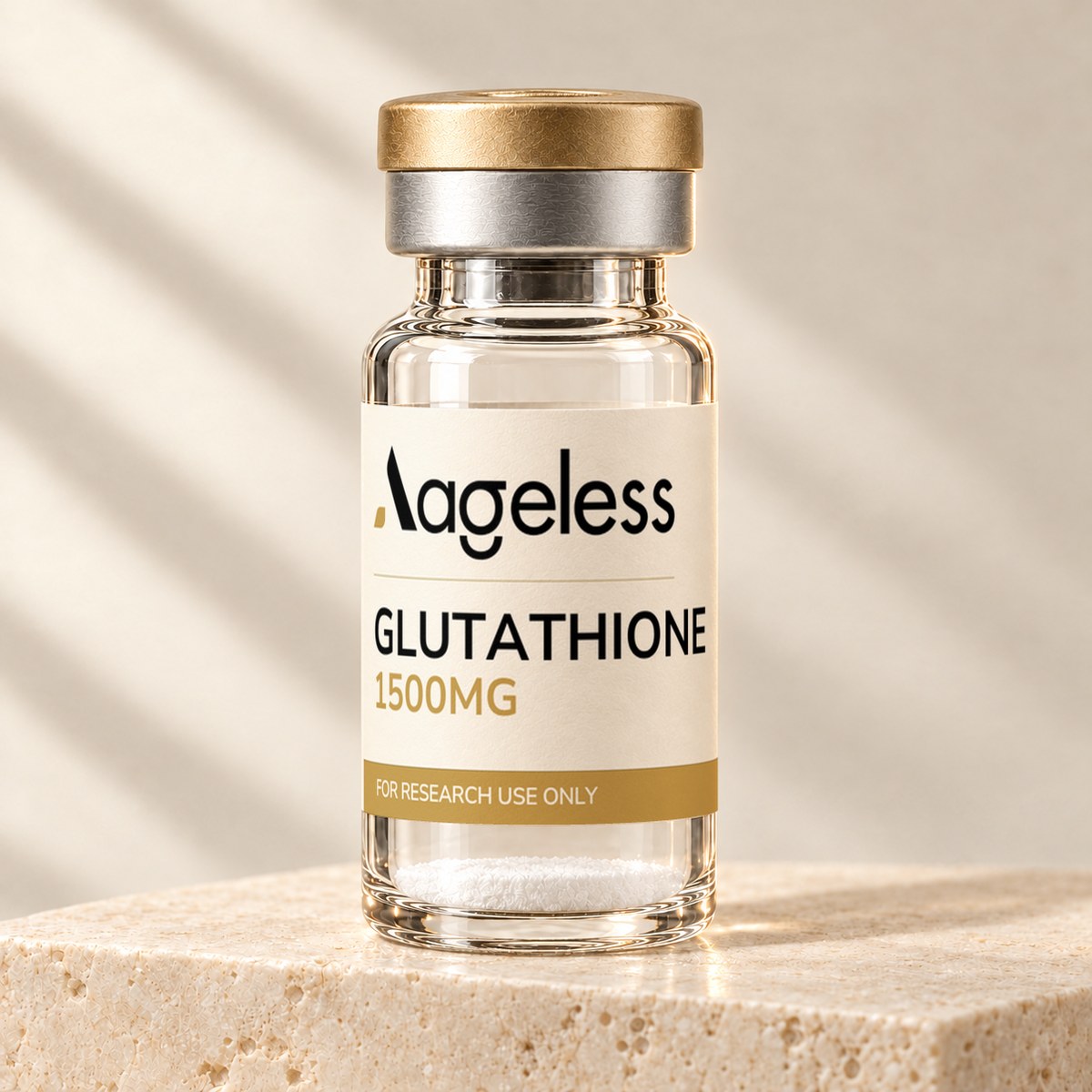
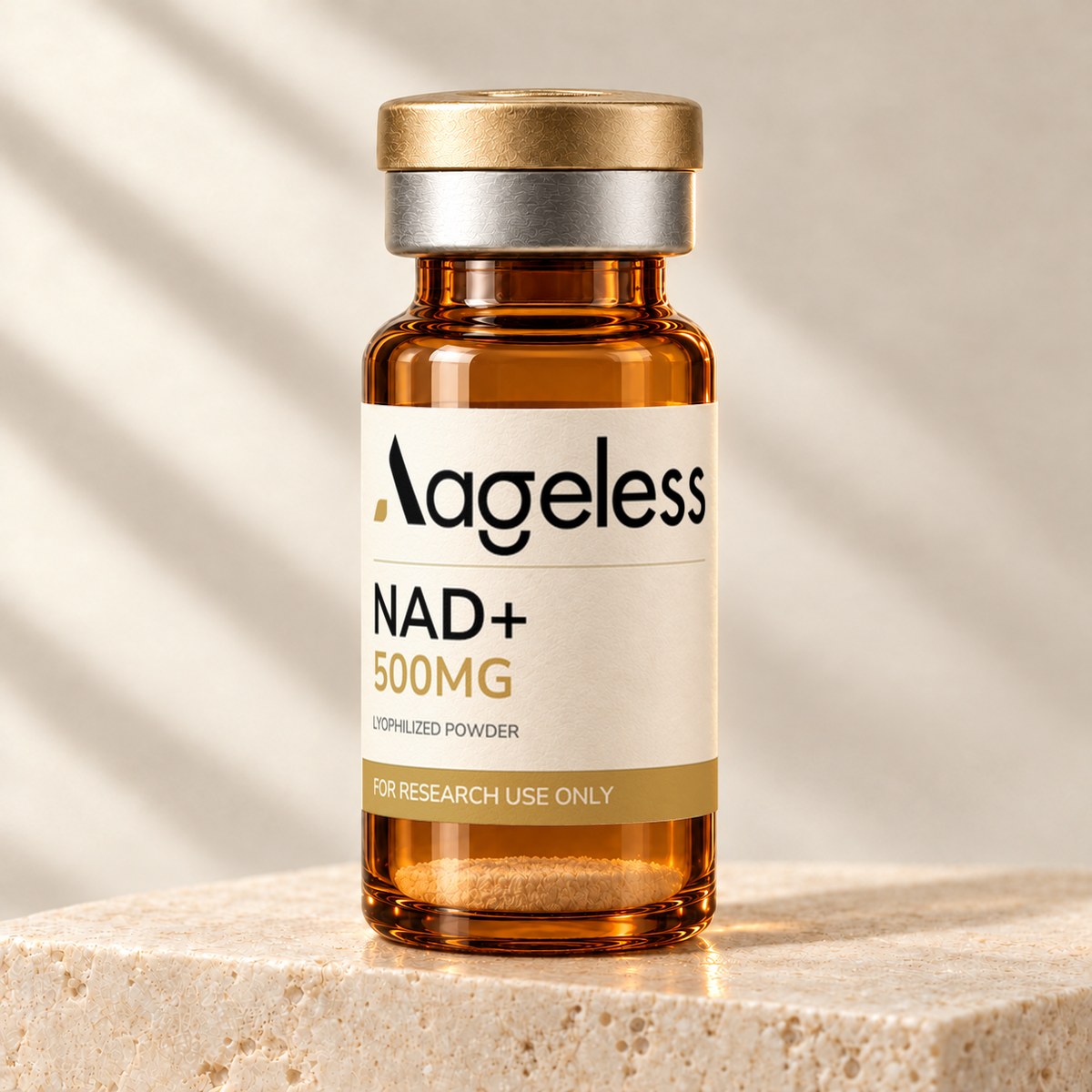
Every stability study starts at time zero. At Ageless Peptides, each vial's QR code and unique serial number link to the COA for that lot, tested by Vanguard Laboratory (Olympia, WA), an ISO/IEC 17025:2017-accredited lab. That gives your study a documented baseline for materials such as Glutathione 1500mg or NAD+ 500mg.
Related Reading
- Batch Consistency in Peptide Quality
- Internal SOPs for RUO Peptide Programs
- Third-Party Testing: Industry Standards and Best Practices
References
- ICH. Q1A(R2) Stability Testing of New Drug Substances and Products. 2003.
- Manning MC, et al. Stability of Protein Pharmaceuticals: Recent Advances. Pharm Res. 2024;41(7):1301–1367.
- Manning MC, Patel K, Borchardt RT. Stability of protein pharmaceuticals. Pharm Res. 1989;6(11):903–918.
All products sold by Ageless Peptides are for Research Use Only. Not for human or animal consumption.