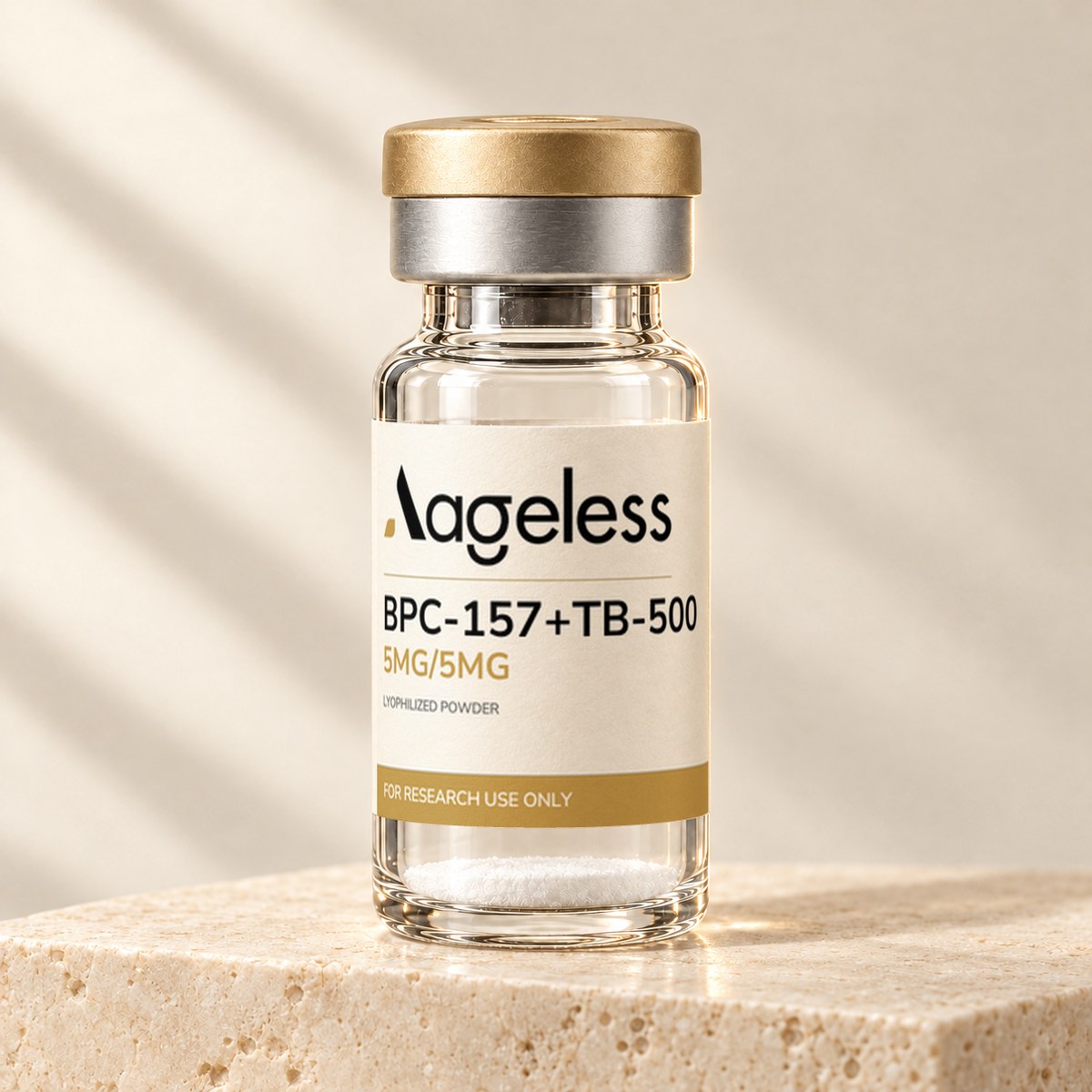


BPC-157 and TB-500 (a synthetic fragment derived from thymosin beta-4) are two of the most widely referenced peptides in preclinical tissue-repair research. Across rodent tendon, muscle, ligament, and wound-healing models, both compounds have generated a substantial in vitro and in vivo literature exploring angiogenesis, cell migration, and cytoprotective signaling pathways.
For laboratories studying wound healing, angiogenesis, or musculoskeletal repair mechanisms, these peptides function as research platforms — tools for probing specific signaling pathways (VEGFR2/Akt/eNOS, actin dynamics, growth factor receptor expression) rather than validated therapeutic agents. This guide summarizes the current preclinical evidence base, common experimental models, and what the literature does and does not establish.
BPC-157: Origin and Proposed Mechanisms
Background
BPC-157 (body protection compound-157) is a synthetic pentadecapeptide (15 amino acids, sequence GEPPPGKPADDAGLV) originally derived from a partial sequence of human gastric juice protein, first isolated and studied by Predrag Sikiric and colleagues in the early 1990s (PMC, "Regeneration or Risk? A Narrative Review of BPC-157"). It has since become one of the most extensively studied experimental peptides in the preclinical tissue-repair literature, with several hundred indexed studies, the substantial majority of which are in vitro or animal-model work.
Proposed Signaling Pathways
The mechanistic literature converges on several overlapping pathways implicated in the effects reported for BPC-157 in experimental systems:
- VEGFR2/Akt/eNOS signaling: Preclinical studies report that BPC-157 activates the vascular endothelial growth factor receptor 2 (VEGFR2) pathway, triggering Akt phosphorylation and endothelial nitric oxide synthase (eNOS) activity, a cascade associated with angiogenesis and endothelial repair (PMC narrative review).
- Nitric oxide (NO) system modulation: Research models across gastric, hepatic, and vascular injury contexts report BPC-157 effects on NO pathway regulation, proposed as a contributor to cytoprotective and anti-inflammatory activity (PMC narrative review).
- ERK1/2 signaling and growth factor expression: Some studies report BPC-157 engagement of ERK1/2 signaling and growth hormone receptor expression changes associated with cell growth and angiogenic pathways in musculoskeletal tissue models (HSS Journal systematic review, Vasireddi et al. 2025).
- In vitro VEGF upregulation: Cell-based assays in wounded skin tissue models report increased vascular endothelial growth factor (VEGF) expression alongside proliferation, migration, and angiogenesis endpoints (PubMed, alkali-burn wound healing study).
TB-500 / Thymosin Beta-4: Proposed Mechanisms
Actin-Binding Biology
TB-500 is typically described as a synthetic peptide corresponding to the active, actin-binding region of the naturally occurring 43-amino-acid protein thymosin beta-4 (Tβ4). The defining biochemical activity of the parent molecule is G-actin sequestration: Tβ4 binds monomeric (unpolymerized) actin at an approximately 1:1 molar ratio via the conserved LKKTETQ motif, regulating the intracellular pool of actin available for filament assembly (PubMed, “Thymosin β4: a multi-functional regenerative peptide”). This actin-regulatory function is mechanistically central to cell migration, since dynamic actin polymerization/depolymerization drives the cytoskeletal remodeling required for cells to move.
Downstream Signaling
Beyond direct actin sequestration, the literature describes thymosin beta-4 as activating integrin-linked kinase (ILK) and downstream Akt signaling, a pathway associated with cell migration, survival, and angiogenesis across multiple experimental tissue-repair models (PubMed, “Thymosin β4: a multi-functional regenerative peptide”). Foundational reviews describe thymosin beta-4 as released by platelets and macrophages at sites of injury, where it has been studied for roles in reducing apoptosis, modulating inflammation, and supporting tissue regeneration across several organ systems in animal models (PubMed, "Thymosin β4: a multi-functional regenerative peptide").
Common Experimental Models
In Vitro Assays
- Cell migration (scratch/wound) assays in fibroblast, tendocyte, or endothelial cell cultures, used to quantify migration rate following peptide exposure.
- Angiogenesis assays (tube formation in endothelial cell culture, chorioallantoic membrane assays) to assess vessel-forming activity.
- Proliferation and viability assays (MTT, cell cycle analysis) paired with VEGF expression measurement in wounded tissue models (PubMed).
In Vivo Rodent Models
| Model Type | Typical Endpoint | Representative Study |
|---|---|---|
| Transected Achilles tendon (rat) | Tendon healing, tendocyte proliferation in vitro | Staresinic et al., J Orthop Res 2003 |
| Tendon-to-bone (Achilles detachment, rat) | Tendon-to-bone healing endpoints, including a corticosteroid comparison arm | J Orthop Res 2006 |
| Ligament injury (rat) | Ligament healing quality | J Orthop Res 2010 |
| Myotendinous junction disruption (rat) | Muscle-tendon-junction repair | Biomedicines 2021 |
| Alkali/thermal skin burns (rat, mouse) | Wound closure, tissue formation | PMC comparative table of preclinical models |
What the Research Literature Does and Does Not Establish
It is important for research teams to distinguish preclinical signal from established clinical fact. A 2025 systematic review in HSS Journal tallying the BPC-157 literature found that despite hundreds of indexed studies, the overwhelming majority are animal or in vitro work, with human data limited essentially to small, methodologically weak observational reports (HSS Journal systematic review, Vasireddi et al. 2025). In short:
- Rodent tendon, ligament, muscle, and wound-healing models show consistent reparative and angiogenic signals across multiple independent labs.
- In vitro mechanistic work supports specific pathway hypotheses (VEGFR2/Akt/eNOS for BPC-157; actin sequestration/ILK-Akt for TB-500/Tβ4) but pathway convergence has not been fully mapped for either peptide.
- Controlled human clinical trial data remain sparse to absent for both peptides as of current literature searches, and no regulatory agency has approved either compound for human therapeutic use.
Analytical and Handling Considerations
Both peptides present distinct handling and characterization considerations relevant to research reproducibility:
- Stability: BPC-157 is frequently described in the literature as a "stable" gastric pentadecapeptide relative to other gastric-derived peptides, but like most unmodified peptides it still requires appropriate lyophilized storage and cold-chain handling to preserve integrity between batches.
- Sequence verification: Confirm the exact amino acid sequence via LC-MS for both compounds — variant naming conventions (e.g., "TB-500" vs. full thymosin beta-4) can create ambiguity about which sequence a given vial actually contains.
- Solvent and reconstitution consistency: Reconstitution method (diluent choice, pH) can affect peptide stability during in vitro assay work; documenting a standardized reconstitution protocol improves cross-experiment comparability.
- Batch-to-batch COA review: As with any research peptide, purity (HPLC) and identity (LC-MS) documentation should be reviewed per lot, not assumed from a generic product listing.
Regulatory Considerations
The BPC-157 and TB-500 supplied here are research materials, not FDA-approved drug products, and are not for human or veterinary use.
Research-use-only labeling has to match how a product is described and marketed. See FDA Expectations for RUO Peptide Vendors.
Key Takeaways
BPC-157 and TB-500 remain valuable research platforms for studying angiogenesis, cell migration, and cytoprotective signaling in preclinical tissue-repair models, with a substantial and mechanistically detailed animal-model literature behind each. Researchers should treat the current evidence base as preclinical: the pathway hypotheses are well supported in cell and rodent systems. Teams designing new studies in this space should ground protocols in the primary peer-reviewed literature cited here, verify peptide identity and purity independently for each batch, and consult the Peptide Research Library's supplier checklists and documentation templates to keep sourcing and recordkeeping compliant with current regulatory expectations.